


SAE J1939 development has evolved far beyond traditional automotive Electronic Control Units (ECUs). Today, engineers can build J1939-enabled systems using low-cost embedded platforms such as the ESP32 and the Raspberry Pi. While both platforms can successfully communicate on a J1939 network, they serve very different purposes.
The question is not whether one platform is better than the other. The real question is:
What type of application are you building?
If you need a dedicated embedded controller with deterministic behavior and low power consumption, the ESP32 is usually the better choice. If you need a powerful edge computer capable of running Linux, databases, web servers, cloud applications, and sophisticated analytics, the Raspberry Pi is often the superior platform.
This article compares both approaches and helps determine which platform best fits your J1939 application.
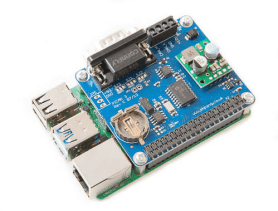 The PiCAN product family from Copperhill Technologies adds professional-grade CAN Bus connectivity to the Raspberry Pi, making it an ideal platform for automotive, industrial, marine, and IoT development. The product line includes support for Classical CAN, CAN FD, NMEA 2000, and specialized variants with features such as dual CAN channels, electrical isolation, GPS/GNSS, real-time clocks (RTC), and integrated power supplies. With native SocketCAN support under Linux, PiCAN HATs allow developers to access CAN networks using standard tools and programming languages such as Python and C, significantly reducing development time. Designed for reliability and ease of use, PiCAN HATs transform the Raspberry Pi into a powerful CAN-based data logger, gateway, protocol analyzer, or edge computing platform for real-world applications.
 The ESP32 development boards from Copperhill Technologies provide a powerful and cost-effective platform for embedded systems, industrial automation, automotive networking, and Internet of Things applications. Based on Espressif’s dual-core ESP32 architecture, these modules combine Wi-Fi, Bluetooth Classic, and Bluetooth Low Energy (BLE) connectivity with extensive GPIO resources and, in selected models, integrated CAN Bus support. Designed for rapid prototyping and production-level development, they support popular development environments such as Arduino IDE, ESP-IDF, and MicroPython, enabling engineers to create connected devices, wireless gateways, data loggers, remote monitoring systems, smart sensors, and cloud-connected applications with minimal hardware complexity. Their combination of processing power, wireless communication, and industrial networking capabilities makes them an ideal choice for modern IoT and edge-computing projects.
Understanding the Hardware Differences
ESP32-Based Systems
The ESP32 is a microcontroller rather than a computer. It runs firmware directly on the hardware without an operating system such as Linux or Windows.
The Copperhill Technologies ESP32-S3 development board combines:
- ESP32-S3 dual-core processor running up to 240 MHz
- Integrated Wi-Fi and Bluetooth
- Native Classical CAN controller
- MCP2518FD CAN FD controller
- 8 MB Flash memory
- 8 MB PSRAM
- USB-C programming interface
- Wide 7 V to 24 V power input range with reverse-polarity protection
This architecture allows the board to support both Classical CAN and CAN FD networks while maintaining the simplicity and reliability of a microcontroller-based design.
Raspberry Pi + PiCAN HAT
The Raspberry Pi is a complete Linux computer.
When combined with a PiCAN HAT, it gains CAN Bus connectivity through an MCP2515 CAN controller and MCP2551 transceiver. The CAN interface appears as a standard Linux network interface (typically can0) through the SocketCAN framework.
The Raspberry Pi provides:
- Multi-core ARM processor
- Linux operating system
- Gigabytes of RAM
- Ethernet, Wi-Fi, and Bluetooth
- USB ports
- File system support
- Database support
- Web server capability
- Python, C++, Java, Node.js, and many other programming environments
The PiCAN HAT effectively transforms the Raspberry Pi into a powerful CAN Bus development platform.
ESP32 Advantages for J1939 Development
Deterministic Real-Time Performance
J1939 messages often require predictable timing.
Because the ESP32 runs dedicated firmware without a Linux operating system, message transmission and reception can be handled with highly predictable timing behavior.
Typical applications include:
- J1939 gateways
- Data loggers
- Instrument clusters
- Engine monitoring
- Fleet telematics devices
- Wireless CAN adapters
- Embedded control systems
Lower Power Consumption
The ESP32 consumes a fraction of the power required by a Raspberry Pi.
This makes it ideal for:
- Battery-powered systems
- Mobile equipment
- Remote monitoring stations
- Solar-powered installations
Integrated Wireless Connectivity
The ESP32-S3 board includes Wi-Fi and Bluetooth as standard features.
This allows direct implementation of:
- MQTT clients
- Cloud connectivity
- REST APIs
- Mobile applications
- Bluetooth diagnostics tools
without requiring additional hardware.
CAN FD Capability
Modern vehicles increasingly utilize CAN FD.
The ESP32-S3 development board supports:
- Classical CAN through the ESP32’s built-in controller
- CAN FD through the onboard MCP2518FD controller
This makes the board suitable for both legacy and next-generation vehicle networks.
ESP32 Limitations
Limited Processing Resources
While the ESP32-S3 is surprisingly powerful for a microcontroller, it cannot compete with the processing capabilities of a Raspberry Pi.
Applications involving:
- Large databases
- Complex analytics
- Machine learning
- Video processing
- Large graphical interfaces
may exceed its practical limits.
Limited Storage
Although external memory can be added, storage remains limited compared to Linux-based systems.
Raspberry Pi Advantages for J1939 Development
Linux Ecosystem
The biggest advantage of the Raspberry Pi is Linux.
Developers can leverage:
- SocketCAN
- Python
- Node-RED
- InfluxDB
- Grafana
- Docker containers
- MQTT brokers
- SQL databases
with minimal effort.
Excellent for Data Analytics
A Raspberry Pi can collect J1939 traffic and perform:
- Historical data logging
- Trend analysis
- Predictive maintenance
- Cloud synchronization
- Report generation
all on the same device.
Web Dashboards
Running a web server directly on the Raspberry Pi is straightforward.
Applications include:
- Fleet dashboards
- Equipment monitoring
- Maintenance systems
- Diagnostic portals
accessible from any browser.
Multi-Protocol Integration
The Raspberry Pi can simultaneously handle:
- J1939
- CANopen
- Modbus
- MQTT
- OPC UA
- REST APIs
- SQL databases
making it a highly capable Industrial IoT gateway.
Raspberry Pi Limitations
Non-Deterministic Timing
Linux is not a real-time operating system.
For many monitoring applications this is not an issue.
However, applications requiring precise J1939 message timing may experience scheduling delays caused by the operating system.
Higher Power Consumption
A Raspberry Pi typically requires significantly more power than an ESP32.
This may be problematic in:
- Battery-operated systems
- Solar-powered systems
- Mobile installations
Longer Boot Times
An ESP32 typically starts within seconds.
A Raspberry Pi requires a Linux boot sequence, which may take considerably longer.
Typical J1939 Applications
Best Applications for ESP32
The ESP32 excels as an embedded controller.
Examples include:
- J1939-to-Wi-Fi gateways
- J1939-to-Bluetooth adapters
- Engine monitoring devices
- Vehicle telematics nodes
- Wireless CAN bridges
- Mobile diagnostic tools
- Stand-alone data loggers
- Remote sensor gateways
- CAN FD applications
The Copperhill ESP32-S3 board is particularly attractive when both Classical CAN and CAN FD support are required in a compact embedded system.
Best Applications for Raspberry Pi + PiCAN
The Raspberry Pi excels as an edge computer.
Examples include:
- Fleet management systems
- Predictive maintenance platforms
- Industrial monitoring systems
- Cloud gateways
- Data historians
- Vehicle test benches
- Engineering analysis stations
- Web dashboard servers
- Machine-learning applications
Direct Comparison
| Feature | ESP32-S3 CAN FD Board | Raspberry Pi + PiCAN |
|---|---|---|
| Architecture | Microcontroller | Linux computer |
| Real-time performance | Excellent | Moderate |
| Power consumption | Very low | Higher |
| Boot time | Seconds | Tens of seconds |
| Cloud connectivity | Excellent | Excellent |
| Web dashboards | Basic to moderate | Excellent |
| Database support | Limited | Excellent |
| CAN FD support | Yes | Depends on HAT |
| Local data storage | Limited | Extensive |
| MQTT support | Excellent | Excellent |
| Fleet management | Good | Excellent |
| Predictive maintenance | Moderate | Excellent |
| Cost | Lower | Higher |
| Complexity | Lower | Higher |
Choosing the Right Platform
For most embedded J1939 products, the ESP32 is the better choice.
If your goal is to build a dedicated device that reads, processes, and transmits J1939 data while communicating through Wi-Fi, Bluetooth, MQTT, or cloud services, the ESP32-S3 platform provides an elegant and cost-effective solution.
If your goal is to build a complete edge computing platform that stores large amounts of data, hosts dashboards, runs databases, performs analytics, and integrates with enterprise systems, the Raspberry Pi combined with a PiCAN HAT is difficult to beat.
In many real-world projects, the most powerful solution is actually a combination of both technologies: an ESP32-based gateway at the vehicle or machine level, communicating with a Raspberry Pi edge computer that handles storage, visualization, analytics, and cloud integration.
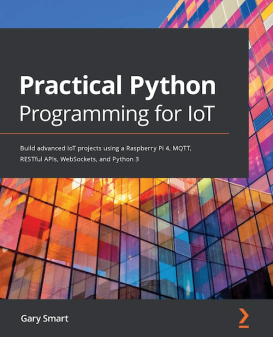 Practical Python Programming for IoT: Build advanced IoT projects using a Raspberry Pi 4, MQTT, RESTful APIs, WebSockets, and Python 3
Build practical Internet of Things (IoT) applications with Python and Raspberry Pi through a series of hands-on projects that combine software, networking, sensors, and electronics. Starting with the fundamentals of Raspberry Pi setup, GPIO interfacing, and electronic circuits, you’ll learn how connected devices communicate using technologies such as REST APIs, WebSockets, and MQTT. Along the way, you’ll create real-world applications ranging from remote LED control and motion detection to smart monitoring and automation systems.
As your skills progress, you’ll integrate sensors, actuators, motors, ultrasonic ranging, and environmental measurements into increasingly sophisticated projects. The book also covers modern Python development techniques, including asynchronous programming and publish/subscribe architectures, while demonstrating integration with IoT platforms and cloud services. By the end, you’ll have the knowledge and practical experience needed to design, build, and deploy your own intelligent IoT solutions using Python and Raspberry Pi. More information…


Comments are closed.